Caves of Ternopil region: Mlynky cave and Uhryn cave. History of discovery and research of Mlynky cave
The caves are called the eighth wonder of the world, the kingdom of eternal darkness. Possession of the mysterious and unknown is open to those who dare to take a journey to the underground labyrinths created by nature.
 |
 |
 |
History of Borschivschyna contains many secrets and mysteries. The greatest of them is the natural piece of art - Gypsum Caves. At one time they served as a safe refuge for people, today - a godsend for speleologists, archaeologists, palaeontologists, and especially for tourists. And it is not necessary to go as far as New Athos.
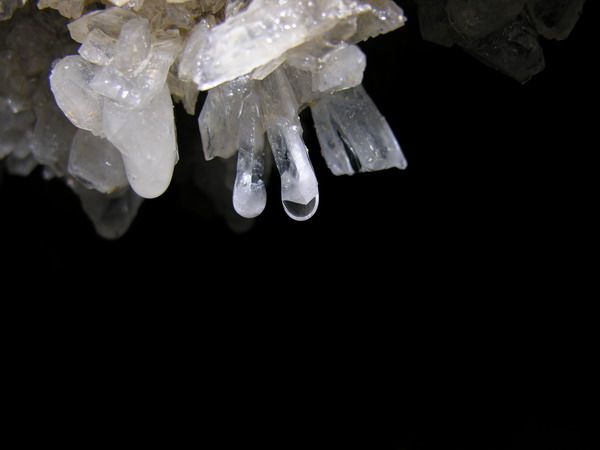
Labyrinths of caves reach the length of several to 600 km (the largest in Europe - Optimistic Cave). The patterns on the walls of caves, stone shapes, clusters of crystals, tubular calcite stalactites, stalagmites and stalagnates leave unforgettable impression. The most noteworthy are caves Mlynky, Verteba, Ozerna, Optimistic and Kryshtaleva (Crystal). The region has already opened more than 100 caves, and every year the cadastral register is replenished with two - three new ones. According to specialists, the West Podillia has been explored only by one fifth of the underground cavities. It is easy to count - about 400 Ternopil caves wait for their Columbuses – speleologists.
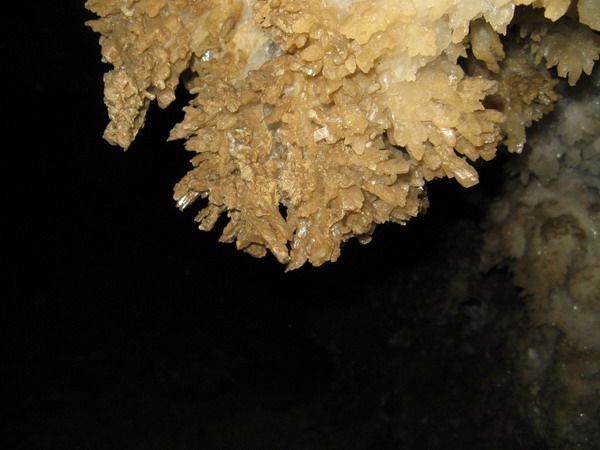
The beauty of the caves is impossible to describe or convey through photography or film. This should be seen: crystals that play at light with all the colors of the rainbow, like Ural semi-precious stones, gardens of stalagmites - from the simplest to the fantastical in form; hanging garlands of stalactites, walls, ceiling, covered with frost of multicolored crystals; polished water walls, different coloring, multicolored nodules on the walls, underground lakes, rivers, waterfalls ... Yes, one must see it!
Find out more about Ternopil caves:
Caves of Podillya (table)
Underground labyrinths wait for their Columbuses
On caves formation
Protection of underground environment. Speleologist’s code of ethics
MLYNKY CAVE
Once a watermill was built on a nameless stream, flowing down near the cave at the end of the 18th – beginning of the 19th centuries, afterwards the river was called Mlynochky (small mills), and a hamlet that appeared nearby was called Mlynky. In the 70s the hamlet was attached to the village of Zalissia and the name Mlynky disappeared from the map. The only memory was left in the name of cave Mlynky.
In Mlynky cave there is a small lake with fresh, but tasteless water. The residents of Mlynky are a big colony of bats. Here one can lay routes for beginners as well as for experienced speleologists.
History of discovery of Mlynky cave
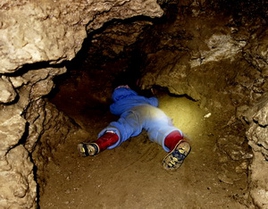
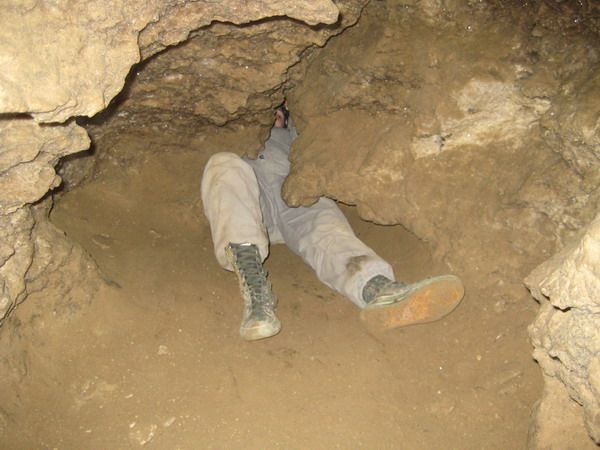
The first news on Mlynky cave appeared in a district newspaper “Nove zhyttya” (New Life) June, 25th 1960. The name of cave was given by the author of the report, M. Bill, a teacher of Uhryn school. An underground hall was known since ancient times. Local residents, extracting plaster (gypsum) for household needs, expanded it and found a gap through which you can get into the labyrinth of caves, but the fear of the unknown did not let them get on.
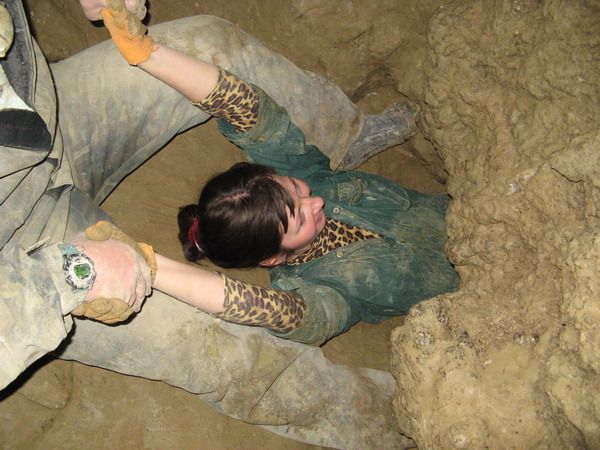
The first who dared to get through the cracks, were club members of the regional tourist station led by V. Radzievskii. At the candles light cave walls sparkled and played by millions of tiny crystals of gypsum, created by a special underground microclimate. Later the club members made a description of cave, made up a passageway scheme, researched microclimate and speleofauna.
 |
 |
 |
Expeditions to Mlynky cave
From 1960 to 1963 six expeditions were organized to Mlynky by Ternopil cavers led by V. O. Radziyevskii and Y. L. Zimels. They had to work 11 - 16 hours in difficult and not always predictable conditions. For lighting they used usual candles and kerosene lamps, and were guided by Adrionov compass.
11 people took part in the 2nd expedition. It was during this expedition when the first excursion to Mlynky with employees of the "Electroarmature" factory was organized.
After the sixth expedition trailbreaking and topographical mapping of cave Mlynky was over.
Overall length is 9.720 km.
In 1994, cavers of Chortkiv speleoclub named "Crystal" opened a new area, which is behind "Dykyi Zahid" (Wild West). It was called “Shchaslyvy” (Happy). This is a difficult to access area as the entrance to it is very narrow. "Shchaslyvy" is not mapped, although topographical mapping was made (length of the area is about 2 km). "Shchaslyvy" has many wonderful bright crystals. In March 1996 Ternopil cavers led by Sergei Yepifanov got through a narrow ten meters crack into a new area and made topographical mapping (length is about 100 m). Due to a survey, made by ternopil citizens, the area has an extension (multilevel tracks system). Research of the area is done by Ternopil cavers. After persevering excavations by M. Kasian group, which lasted for 8 years, in 1998 a big new area, called "Rizdvyany"(Christmas), was opened in Mlynky. The name to the area was given due to the fact that it was dug at Christmas.
Today the labyrinth extension search has been still continuing. There were found small extensions in different parts of the cave under supervision of R. Cardinal and V. Snihur. The names of the new areas are: “Mobilny” (Mobile), “Lymon” (Lemon), “Molodizhny” (Youth), “Torba” (Bag).
The last significant breakthrough was extension of Yepifanov direction in the area of STP. A huge area Hlobalny (Global) was discovered after developing blockages and blasting works. Now its mapping is being conducted, but we can say that this discovery increased the cave size almost twice as much.
The examined length of Mlynky cave as of August 2009 is 40 km.
The search continues…
Find out more about research of cave Mlynky:
Cave Mlynky: a big circle of labyrinth
History of discovery and research of Mlynky cave
UHRYN CAVE
Two kilometers west from the entrance to Mlynky cave, at the same right bank of the river Mlynochky, near the village of Uhryn there is a huge funnel, at the bottom of which the entrance to Uhryn cave looms black.
Slightly leaning we get into an entrance hall “Vestybul” that stretches for 20 m deep into the mountain.The closer part to the cave is known since the first half of the XX century.
Here is the following history of the cave. People mined gypsum on the mountain; it was burned and milled into flour, which was used in construction. Different decorations were made from gypsum stones for the landowner, Mr. Pototsky: ashtrays, boxes, statues. Workers who mined gypsum, broke a small hole in the ground, but did not pay attention to it. In 1934, a teacher from a local school, Mr. Otetsky took interest in this hole in the mountain. He excavated it and found a large underground hall.
Since then, the development of the cave began. A crew of 15 people had been clearing underground tunnels for two years. Later the cave was owned by Podolsky regional tourist association (PRTA), a department of Chortkiv PRTA took care of it.
Since 1935 the cave has become completely open for tourists. There is a gate with the inscription at the entrance: “The admission to the underground labyrinths is paid” A paid guide was held in the cave who carried out the tour on a paying basis.
Uhryn cave became well-known far beyond the district boundaries. Tourists from Serbia, Romania, France, England and other countries came to see it.
Find out more about Uhryn cave:
Uhryn cave: history of discovery and research
Uhryn cave